Want to be in the loop?
subscribe to
our notification
Business News
VIETNAM NEEDS TO THINK LOGISTICALLY TO ATTRACT MORE FOREIGN INVESTMENT
Clement Blanc, managing director of DHL Global Forwarding Vietnam, shared with VIR that Vietnam had the potential to become a logistics hub in Southeast Asia. The country is well placed to benefit from the greater integration in ASEAN and the Greater Mekong Sub-region (GMS).
Vietnam is situated in a very dynamic part of ASEAN, connecting the region with its large neighbour, China. It is also centrally located in the community with a long coastline that makes it ideal to increase its shipping volumes and general logistics capabilities.
In addition, according to Blanc, Vietnam is fast becoming a manufacturing hub, especially for high-tech products. In the first five months of the year, there was an increase in foreign direct investment of 136 per cent compared to the same period last year, mainly in the processing and manufacturing sectors. The strong existing manufacturing base will allow Vietnam freer access to markets around the region.
In-depth studies and business surveys show that trade and investment facilitation are top priorities for business, such as streamlined import procedures, harmonised customs procedures and strengthening facilitation of transport across ASEAN countries. In order to become more competitive in the region, Vietnam could work on a few areas such as further improving infrastructure and continuing reforms on customs.
“An area that we highly recommend is to have the new Long Thanh international airport built quickly as the current airport in Ho Chi Minh City is already congested. The country should create a free trade zone around Long Thanh or Cai Mep-Thi Vai port complex which will likely attract logistics investment and help Vietnam towards becoming a hub in Southeast Asia,” Blanc said.
He further noted that logistics companies in Vietnam needed to be aware of how to obtain the tariff preferences under the ASEAN Trade in Goods Agreement (ATIGA) as well as other free trade agreements that ASEAN has negotiated with its trading partners to avail opportunities and expand operations.
Sharing the same view, George Berczely, chairman of the Transportation and Logistics Sector Committee under the EuroCham Vietnam, told VIR that Vietnam ranked comparatively well in terms of the logistics indicators according the World Bank’s report on the ease of doing business, and has shown remarkable improvements over the last few years.
“It is important that the Vietnamese government continues this journey, for example in pushing forward the project to establish a National Single Window in collaboration with the many agencies involved in customs clearance and specialised inspections. Meanwhile, customs resources should continue focusing on high-risk consignments, which means making the process for low-risk consignments faster and easier,” Berczely added.
Source: VIR
Related News

MEMBER CORNER / PROMOTIONS
SENTRYSAFE CHW20201 - EFFECTIVE WATER RESISTANCE, MAXIMUM PROTECTION
In unexpected flooding situations, the most important thing is to keep your valuables dry and intact. SentrySafe CHW20201 is specially designed with superior water-resistant capabilities, helping protect documents, cash, and important belongings even when fully submerged. Proven in real testing: After water submersion, the documents inside remain dry - undamaged.

MEMBER CORNER / PROMOTIONS
AN ELECTRIFYING NIGHT WITH THE "QUEEN OF DANCE" THU MINH AT THE GRAND HO TRAM!
The stage at The Grand Ballroom is set to catch fire as Vietnam’s undisputed "Queen of Dance," Thu Minh, takes the spotlight. Renowned for her powerhouse vocals, magnetic stage presence, and sultry, high-energy performances, Thu Minh promises an evening of pure musical euphoria. The energy escalates with an exclusive appearance by special guest and The Voice champion, Vu Thao My.

HR / LABOUR/ EMPLOYMENT
HIGH-QUALITY HUMAN RESOURCES NEEDED TO ATTRACT NEW TECH INVESTMENT CAPITAL
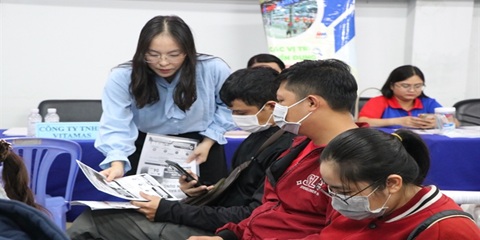
Besides infrastructure, Việt Nam must also rapidly develop a highly skilled workforce to attract investment in AI, semiconductors and advanced manufacturing, experts have said. Don Lam, CEO and co-founder of investment management company VinaCapital, said that global technology investors were increasingly looking at the readiness of the entire ecosystem, with high-quality human resources a decisive factor.
HR / LABOUR/ EMPLOYMENT
HIRING OUTLOOK STRENGTHENS IN Q4 AS SKILLS SHORTAGES PERSIST
Hiring intentions among employers in Việt Nam strengthened in the fourth quarter, with 52 per cent of surveyed companies planning to increase headcount between October and December, according to a ManpowerGroup survey released this week. Việt Nam's hiring outlook was stronger than the Asia Pacific and Middle East (APME) regional average of 33 per cent and the global average of 29 per cent, ranking third in the region and 11th globally among 42 markets surveyed.
BANKING / FINANCE / INSURANCE / TAX
LARGE BANKS FORECAST TO GAIN HIGHER PROFITABILITY IN H2 2026
The return on average assets (ROAA) of the banking sector will likely remain stable at around 1.5 per cent in the second half of 2026, but profitability divergence among banks will increase, with large banks outperforming peers on stronger margins and diversified earnings, analysts forecast. In a recent report on the banking sector, analysts from the Vietnam Investors Service Rating said the sector’s ROAA rose by 10 basis points quarter-on-quarter to 1.51 per cent in the first half of this year, driven by net interest margin (NIM) improvements at some State-owned banks and large private banks.
GARMENT / TEXTILE
VIỆT NAM'S FOOTWEAR, BAG EXPORTS TO US TOP $8 BILLION IN EIGHT MONTHS
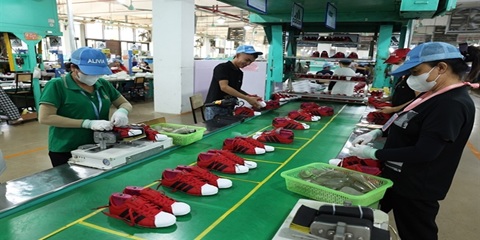
Việt Nam's exports of footwear and handbags to the US exceeded US$8 billion in the first eight months of 2026, as the US and EU remained the country's biggest markets despite sluggish growth in footwear shipments. Exports from Việt Nam's leather and footwear sector reached more than $2.45 billion in August, down 9 per cent from July but up 3 per cent from a year earlier, according to preliminary statistics.
Events Sponsors






















